
Thing
VTOL
Vertical Take-off and Landing, abbreviated to VTOL, is a classification of…
Vertical Take-off and Landing, abbreviated to VTOL, is a classification of aircraft meaning that take-off and landing, rather than needing a runway down which a craft travels to build up speed and lift, is conducted vertically by thrusters or propellers. The key advantage of VTOL capability is that it enables an aircraft to hover over an area, allowing for longer loiter time, and allow the craft to operate from a diverse array of airfields, using less space to get airborne. VTOL capability uses more fuel than Conventional-Takeoff-and-Landing (CTOL) capability, though.
UNSC
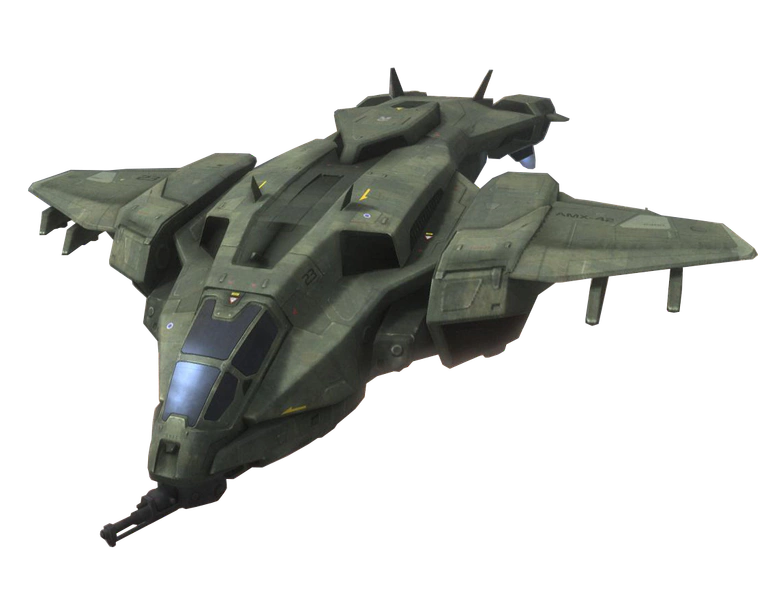
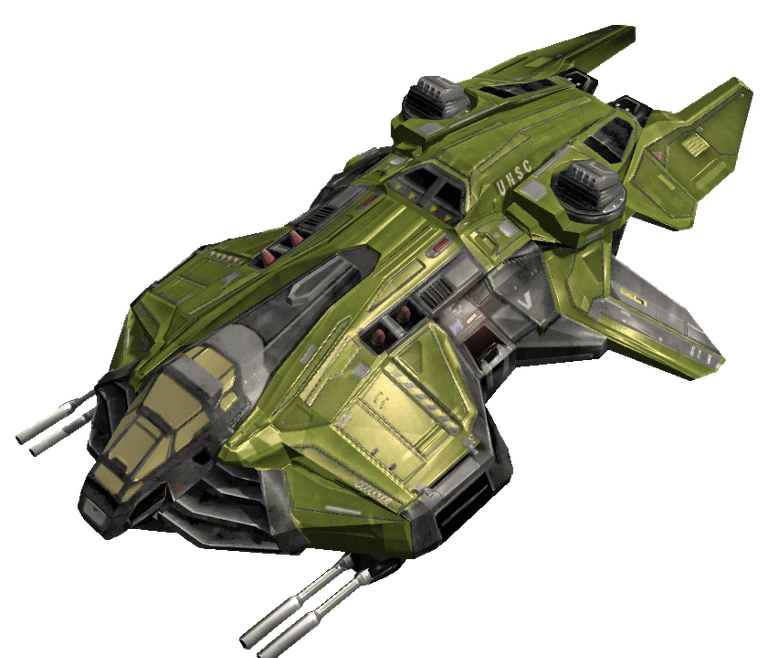
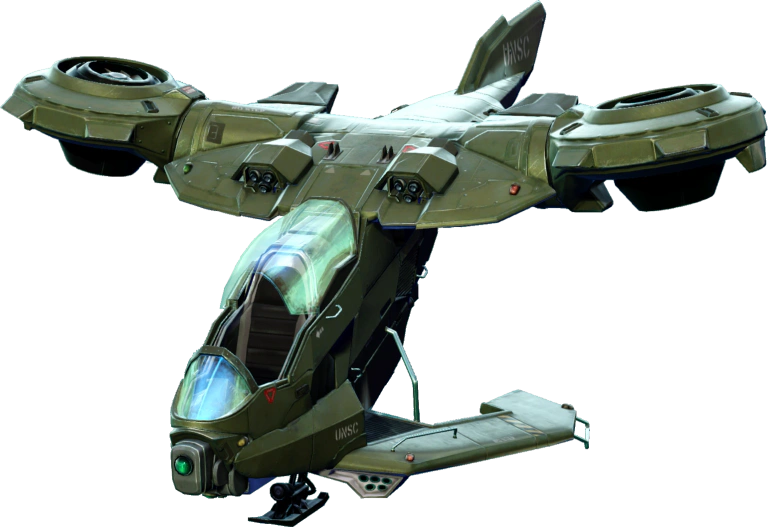
For the most part, UNSC aircraft use jet thrusters mounted on pivots to provide vertical thrust. The dominant advantage of this is that it is capable of being used for conventional thrust as well, including horizontal and lateral thrust, by tilting the jet engines. Aircraft such as the Pelican, the Vulture, and the Hornet use this type of VTOL configuration.
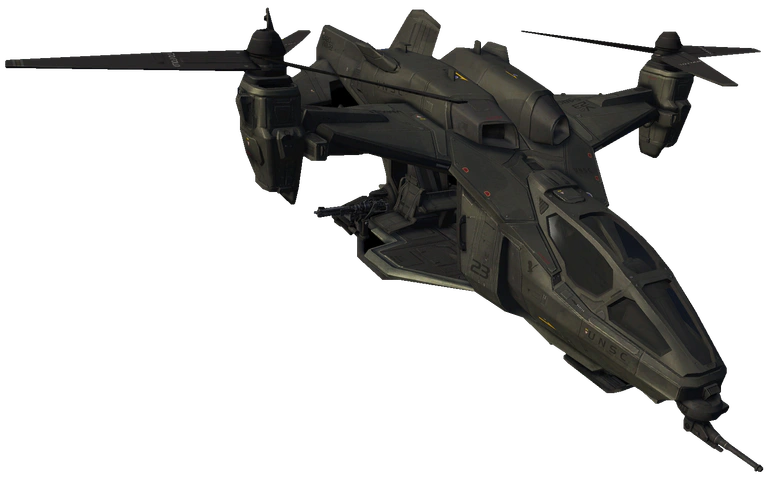
Another method is by using spinning propellers to provide lift, such as ducted fans or traditional helicopter rotors. Although not as lightweight or economic as jet thrusters, ducted fans provide a higher thrust-to-weight ratio, and can be more efficient, as well as having the advantage of producing less noise, always an advantage in a combat vehicle. Aircraft such as the UH-144 Falcon and the AV-22 Sparrowhawk use ducted fans to generate lift, with a fan shrouded in each wing.
Covenant
Covenant craft use artificial gravity generators to provide lift. These craft are carried on a cushion of anti-gravity, produced by artificial gravity generators. The Spirit and Phantom dropships are VTOL-capable craft, with the former using an artificial gravity field produced between its two side booms, and the latter using a somewhat more logical layout of ventral hull-mounted generators.

UNSC
G79H-TC/MA "Pelican" Gunship
Sources
Adapted from the original article, under CC BY-SA 3.0.